
Houston Metro Termite Pressure Report 2026
A Research Brief for Homeowners
By Green Country Pest Control
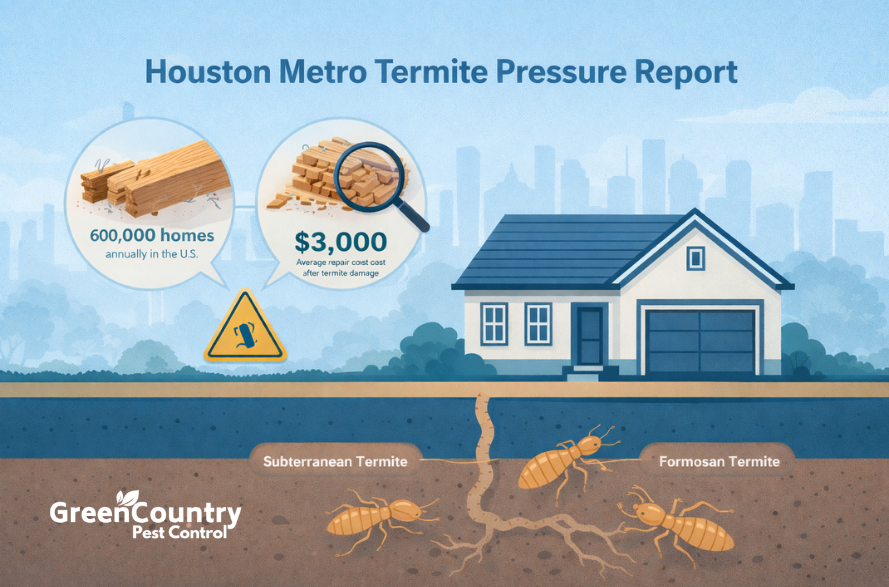
Termites are one of the most destructive structural pests in the United States, and homeowners across the Houston metropolitan area face some of the highest risk levels in the country. The region’s warm climate, frequent rainfall, and expanding termite populations create ideal conditions for colonies to thrive near homes and buildings.
This report summarizes the current research and data surrounding termite pressure in the Houston metro area and explains what local homeowners should understand about the risks to their property.
The Scale of Termite Damage in the United States
Termites are responsible for billions of dollars in damage every year. Across the United States, termites damage approximately 600,000 homes annually and cause around $5 billion in property damage and control costs each year.
The financial impact can be significant for homeowners. The average repair cost after termite damage is about $3,000, though severe infestations can lead to structural repairs costing far more.
In many cases, homeowners’ insurance policies do not cover termite damage because it is considered preventable through routine maintenance and inspections.
Because termites work slowly and often remain hidden inside walls or foundations, infestations frequently go undetected for years until structural damage becomes visible.
Why Houston Has High Termite Pressure
The Houston metropolitan area is considered a high-risk termite region, largely because of its climate and soil conditions.
Warm Climate
Termites thrive in warm environments. The southern United States provides the ideal temperature range for termite colonies to stay active most of the year.
In fact, Texas is classified as a Termite Infestation Probability Zone 1, the highest risk category in the United States.
Unlike colder climates where termites slow down during winter months, colonies in Southeast Texas can remain active for much longer portions of the year.
High Humidity and Moisture
Termites require moisture to survive. Houston’s coastal humidity, frequent rainfall, and heavy soils help maintain the damp conditions termites need to build underground tunnels and expand their colonies.
Moist environments also allow termites to forage more aggressively for wood, including the framing inside homes.
Rapid Urban Development
Houston’s growing neighborhoods provide an abundance of food sources for termites. Wood framing, landscaping timbers, fences, mulch, and tree roots can all attract termite activity near homes.
Once a colony establishes itself nearby, termites can travel significant distances underground in search of food.
The Most Common Termites in Houston
Several termite species are active across Texas, but two types account for the vast majority of structural damage.
Subterranean Termites
Subterranean termites are the most destructive wood-damaging insects in the United States, responsible for billions of dollars in damage annually.
These termites live underground in large colonies and enter homes through mud tubes built along foundations, plumbing penetrations, or cracks in concrete slabs.
Colonies can grow into the hundreds of thousands or even millions of termites.
Formosan Termites
Houston and the Gulf Coast are also home to Formosan subterranean termites, an invasive species known for extremely large colonies and rapid damage.
Formosan termites are considered one of the most aggressive termite species in the world. Under ideal conditions, a colony can cause significant structural damage in as little as six months.
This species has spread across many counties in eastern Texas and continues expanding through urban areas.
Because of their colony size and feeding speed, Formosan termites are a major reason termite pressure remains high across the Houston region.
Why Termite Infestations Often Go Undetected
One of the biggest challenges with termites is how hidden they are.
Unlike many pests that homeowners see immediately, termites typically remain concealed inside walls, flooring, and structural beams. This means infestations can progress for months or years before obvious signs appear.
Common warning signs include:
- Swarming termites (often mistaken for flying ants)
- Mud tubes on foundations or walls
- Hollow-sounding wood
- Blistering paint or warped floors
- Discarded wings near windows or lights
Unfortunately, many homeowners only discover termites after renovations or inspections reveal hidden damage.
The Real Cost of Waiting
Termites feed on cellulose, which is found in wood and many building materials. Colonies can consume wood continuously, 24 hours a day.
Some estimates suggest that a termite colony can consume over two feet of a standard 2×4 wooden beam within a year under ideal conditions.
This slow but constant feeding can compromise structural supports, flooring, framing, and other critical components of a home.
By the time damage becomes visible, repairs can be extensive and expensive.
Why Prevention Matters
Because termites are so common in Southeast Texas, most pest management professionals emphasize prevention rather than waiting for an infestation to appear.
Key prevention strategies include:
- Annual Professional Inspections
- Routine inspections help identify termite activity early before structural damage occurs.
- Moisture Control
- Reducing moisture around the foundation can make homes less attractive to termites.
- Eliminating Wood-to-Soil Contact
- Wood structures such as fences, decks, and landscaping timbers should be separated from direct soil contact whenever possible.
- Professional Treatment Systems
- Liquid treatments and termite bait systems can create protective barriers around homes to stop colonies before they reach the structure.
Green Country Pest Control’s Approach
At Green Country Pest Control, protecting homes from termites is more than just another service. It is a responsibility.
Termites are not simply a nuisance pest. They threaten the structural integrity of homes and can create serious financial consequences for families.
Our technicians focus on:
- Detailed inspections designed to detect hidden termite activity
- Treatment systems designed for Gulf Coast soil conditions
- Preventative strategies tailored to Houston-area homes
- Long-term monitoring to reduce future risk
Whether we are addressing early warning signs or eliminating a major infestation, our goal is the same: protect homes and the families who live in them.
A Final Word for Houston Homeowners
Houston’s climate makes termites a permanent part of the local pest landscape. The good news is that with early detection, proper prevention, and professional treatment, termite damage can often be avoided entirely.
The key is awareness.
Understanding the risks and taking action early can save homeowners thousands of dollars and prevent serious structural damage.

Hi There, I'm Read Flake.
As a Houston homeowner with a family, I know exactly what goes through your head when you find a pest problem. You want it handled fast, and you want to know your kids are safe. That is the standard I built Green Country around, and it is the standard every technician on my team is held to every single day.