
Mosquito Control in Alvin, TX: What Homeowners Need to Know This Season
If you have noticed more mosquitoes in your yard this summer, you are not imagining it. Mosquito season in Alvin and across Brazoria County runs hard from April through November, and 2026 has already brought confirmed West Nile activity to the region. For families with kids who want to use their backyard, that is not a minor inconvenience. It is a real health concern that gets worse the longer it goes unaddressed.
This article covers what is driving mosquito pressure in South Houston right now, what the actual disease risk looks like in Brazoria County, and what professional mosquito control can do that yard sprays from the hardware store cannot.
West Nile Is Already Active in Brazoria County This Year
As of May 2026, Brazoria County has confirmed positive mosquito pools testing for West Nile virus. Harris County has reported the first human case in Texas this year, and Brazoria County is among the Houston-area counties where mosquitoes have already tested positive. This is not a future risk. It is a current one, and the season has not yet reached its peak.
West Nile spreads through the bite of an infected Culex mosquito, the same southern house mosquito common throughout Brazoria County neighborhoods. Most people who contract West Nile do not develop serious illness, but roughly one in five will experience fever, body aches, and fatigue. A small percentage develop neuroinvasive disease, which can cause paralysis, disorientation, and in rare cases, death. Children, elderly residents, and anyone with a compromised immune system face higher risk.
Brazoria County has a dedicated Mosquito Control District that runs surveillance traps weekly, tests samples for West Nile and other viruses, and deploys ground and aerial spraying when activity levels spike. Their work reduces county-wide pressure significantly. But public spraying programs treat roads, ditches, and common areas. They do not treat the standing water in your backyard, the shaded areas under your deck, or the dense vegetation along your fence line where mosquitoes rest and breed between feedings.
That gap is where residential mosquito control matters most.
Why Alvin and South Houston Have Such Intense Mosquito Pressure
The Gulf Coast climate creates near-ideal conditions for mosquito breeding throughout most of the year. High humidity, warm temperatures, and frequent rain events mean that standing water appears and replenishes regularly. A mosquito can complete its life cycle from egg to biting adult in as little as seven days in warm conditions, which means populations can rebuild quickly after any single treatment or rain event.
Alvin and the surrounding communities sit in a low-lying coastal plain where drainage is naturally slow. Water pools in lawn depressions, clogged gutters, landscaping borders, and around AC condensate lines longer than it does in areas with better elevation and drainage. Every one of those water sources is a potential breeding site. A single tire left outside, a bucket that catches rain, or a bird bath that is not refreshed weekly can produce hundreds of mosquitoes.
Beyond standing water in residential areas, the ditches, storm drains, and retention ponds that run through South Houston neighborhoods provide large-scale breeding habitat that is difficult for any individual homeowner to eliminate on their own. Mosquitoes travel up to several miles from their breeding sites, so even a well-maintained yard can see significant pressure from surrounding areas.
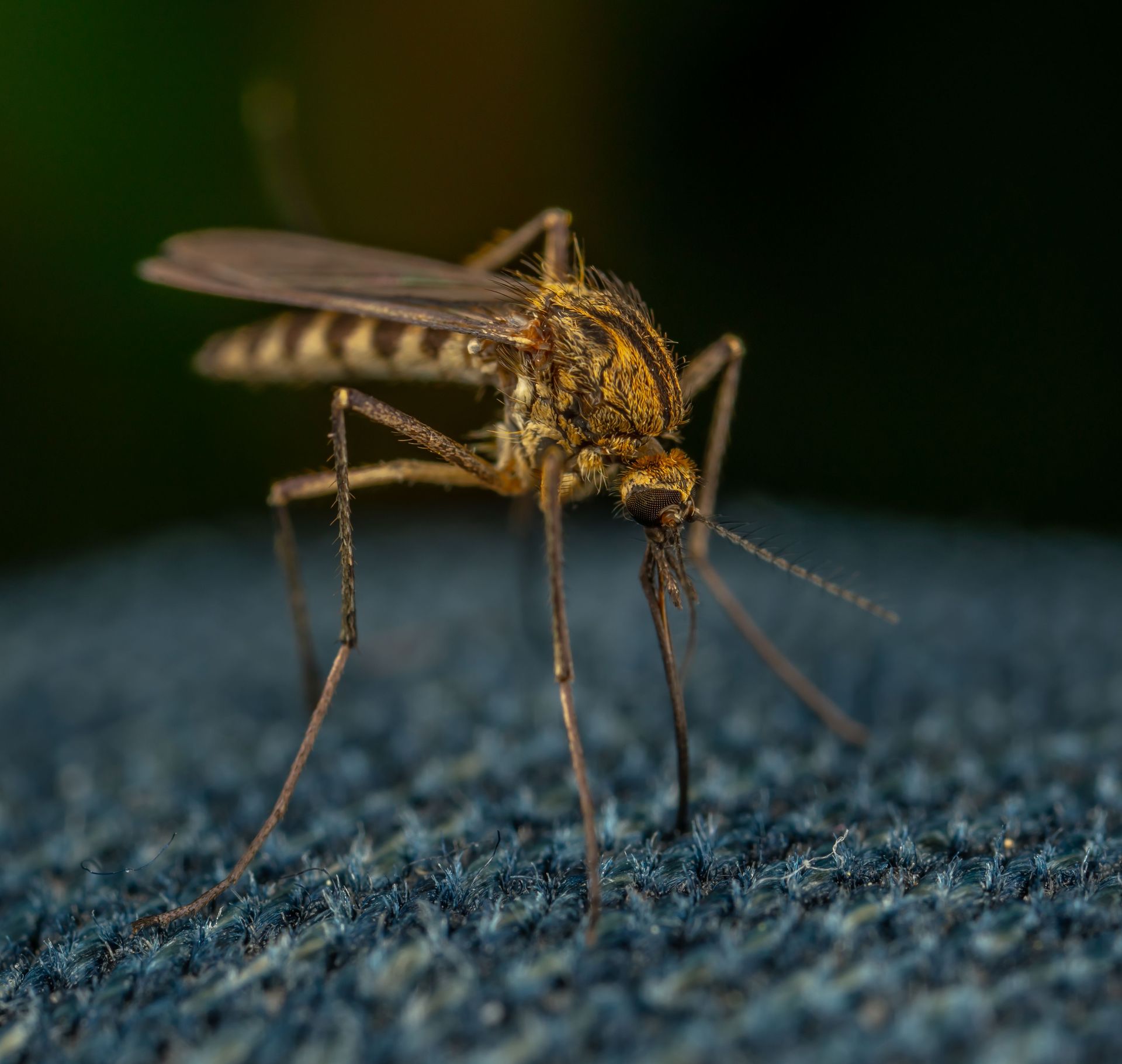
The bottom line is that South Houston's geography, drainage patterns, and climate combine to make mosquito pressure here more persistent than in most other parts of Texas. Managing it requires a consistent approach, not a one-time treatment after you have already been driven inside.
What Professional Mosquito Control Actually Does
Store-bought mosquito sprays and candles provide temporary relief in a small area. They do not address breeding sites, they do not treat the vegetation where adult mosquitoes rest during the day, and their effect rarely lasts more than a few hours. A professional mosquito treatment works differently and at a different scale.
A trained technician inspects the property for active breeding sites and resting areas before any product is applied. Standing water that cannot be eliminated is treated with a larvicide that stops mosquito development before adults emerge. Dense vegetation, shrub lines, the underside of deck structures, and shaded ground-level areas are treated with a residual product that kills adult mosquitoes on contact and continues working for several weeks. Entry points and areas near doors and windows receive particular attention.
The result is a significant reduction in the mosquito population on and immediately around your property, not just a temporary masking of the problem. Recurring service visits maintain that reduction throughout the season so that your backyard stays usable from spring through fall rather than becoming no-go territory after dark.
For families with children who want to play outside, the difference between treated and untreated properties during peak South Houston mosquito season is substantial. It is also the kind of protection that compounds over time. Consistent treatments mean fewer breeding cycles complete on your property, which means lower baseline populations heading into the following season.
What You Can Do Between Treatments
Professional mosquito control works best when combined with a few consistent habits at home. The Brazoria County Mosquito Control District and the Texas Department of State Health Services both recommend the same core steps.
Dump standing water from any container that holds it. Flowerpots, buckets, toys, bird baths, wheelbarrows, and kiddie pools are all common breeding sites. Even a bottle cap holding a small amount of water in the right conditions can support mosquito larvae. Walk your property after any rain event and empty or move anything that has collected water.
Keep gutters clear. Clogged gutters are one of the most overlooked mosquito breeding sites on residential properties. A gutter full of decomposing leaves holds water for days after a rain and can produce large numbers of mosquitoes close to the roofline of your home.
Trim vegetation. Mosquitoes rest in shaded, humid areas during the heat of the day. Dense shrubs, tall grass along fence lines, and ground cover that stays moist all day provide ideal resting habitat. Keeping these areas trimmed reduces the places mosquitoes can shelter between feedings.
Use EPA-registered repellent when spending time outdoors, especially during dawn and dusk hours when mosquito activity peaks. Products containing DEET, picaridin, or oil of lemon eucalyptus are all effective and appropriate for adults and children when used as directed.
When to Call a Professional
If you are seeing heavy mosquito activity on your property despite basic yard maintenance, or if you want your outdoor space to be reliably usable for your family throughout the summer, recurring professional treatment is the most effective solution available. A single treatment before a backyard event can also make a significant difference for outdoor gatherings.
With West Nile already confirmed in Brazoria County mosquito populations this season, the timing matters. The window between now and the peak of mosquito season in August and September is the right time to establish a treatment program, not after the population has built to its highest point.
Green Country Pest Control serves Alvin and the surrounding South Houston communities including Pearland, Friendswood, Manvel, Iowa Colony, and League City. Our residential pest control service is backed by a pest-free guarantee, and we schedule around your family's routine. If you are ready to take back your backyard, request a free estimate and we will get out to your property quickly.

Hi There, I'm Read Flake.
As a Houston homeowner with a family, I know exactly what goes through your head when you find a pest problem. You want it handled fast, and you want to know your kids are safe. That is the standard I built Green Country around, and it is the standard every technician on my team is held to every single day.